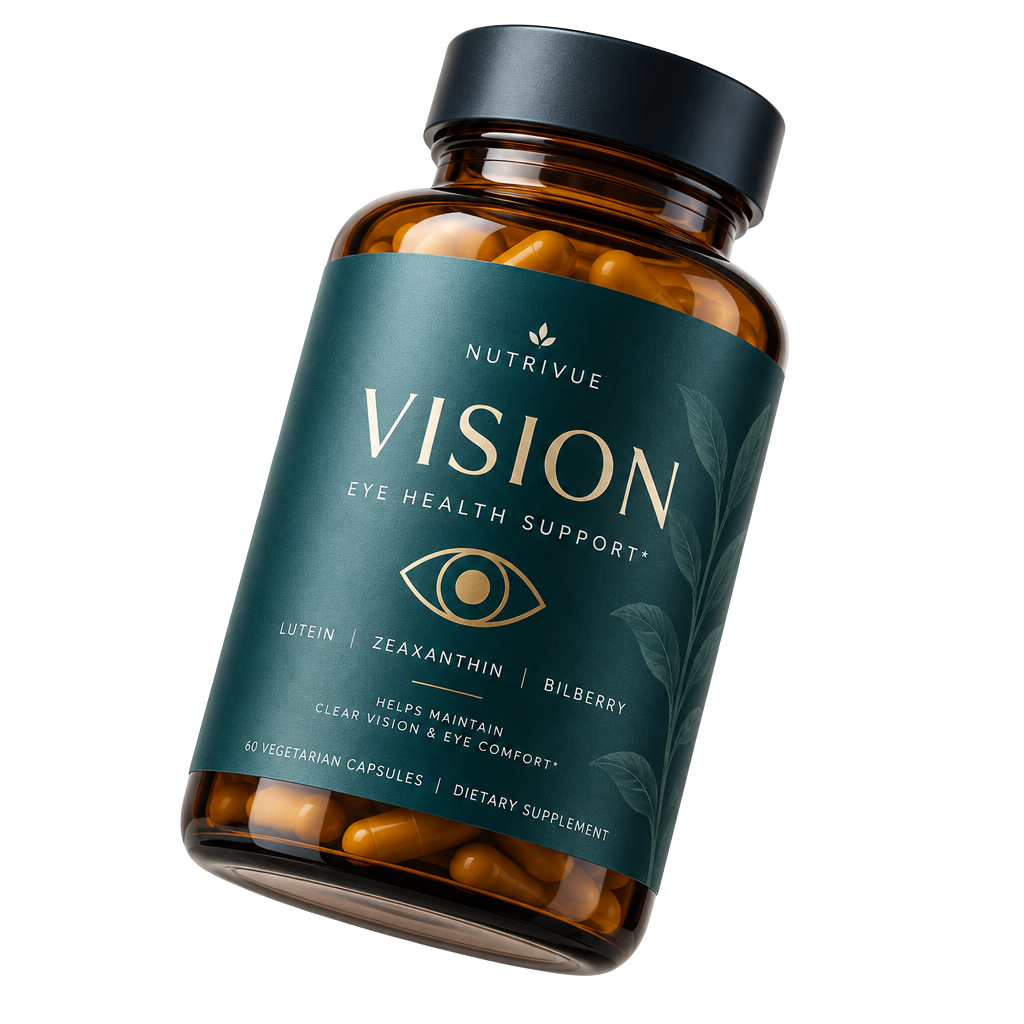
Sight rarely fades all at once. In most age-related conditions it narrows quietly — a page that needs more light, a face that takes a second longer to resolve. Nutrition will not reverse that, but a growing body of ophthalmic research shows the macula depends on a handful of nutrients that most diets under-deliver.
Four facts about your eyes
~6 mm
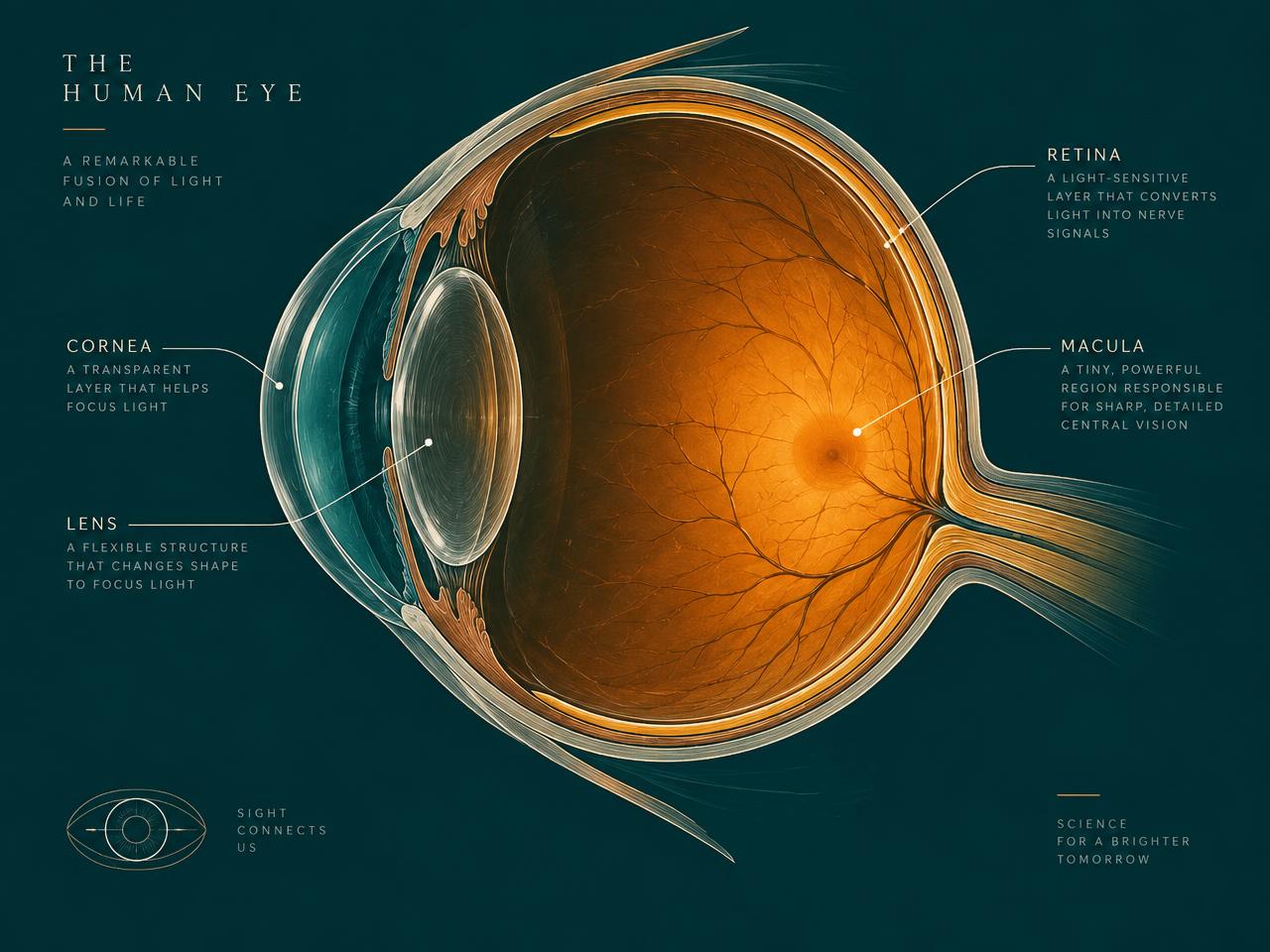
The macula
A small patch at the centre of the retina that handles almost all sharp, detailed central vision — reading, faces, driving.
2 pigments
Lutein & zeaxanthin
The only carotenoids concentrated in the macula. The body cannot make them, so every microgram comes from diet.
AREDS2
The landmark trial
A US National Eye Institute study of over 4,000 people that tested a specific nutrient formula in age-related macular degeneration.
10 yrs
Follow-up data
Long-term AREDS2 follow-up reported slower progression to late AMD in the lutein/zeaxanthin arm than the beta-carotene arm.
How the macula loses ground
Photoreceptors work in a punishing environment: intense light, high oxygen use, and fatty membranes that oxidise easily. Over decades, waste products accumulate beneath the retina as deposits called drusen — the hallmark of early age-related macular degeneration. Alongside this, the density of protective pigment in the macula tends to fall.
That pigment is made of two carotenoids the body cannot synthesise. This is the specific, narrow reason diet and supplementation enter the conversation at all — not as a cure, but as a way to keep raw material available.
The nutrients that matter — and why
- Lutein & Zeaxanthin
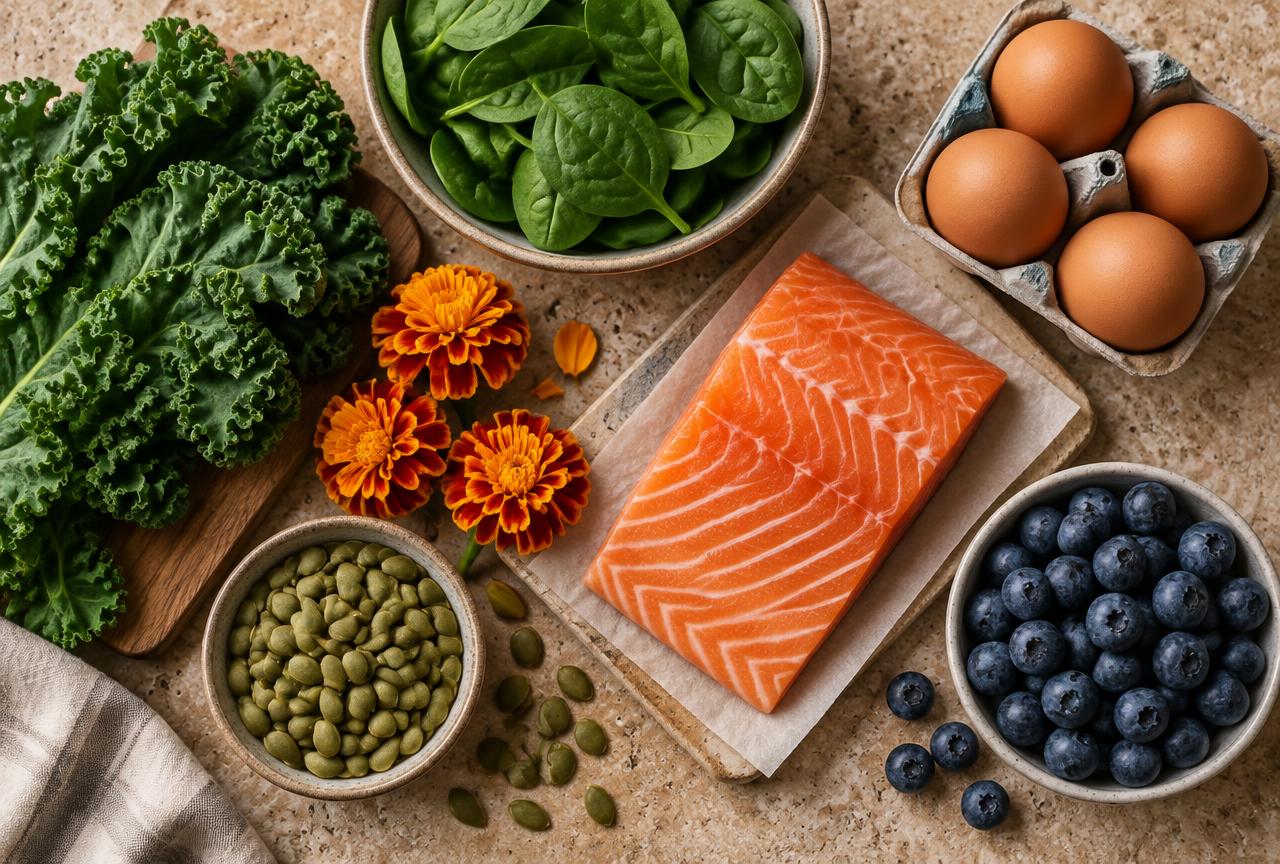
- Filter high-energy blue light and act as antioxidants inside the macula itself. Found in kale, spinach and marigold extract.
- Zinc
- The retina holds one of the highest zinc concentrations in the body; it supports the enzymes that recycle visual pigment.
- Vitamins C & E
- Antioxidants included in the AREDS2 formula to help limit oxidative stress in retinal tissue.
- Omega-3 (DHA)
- DHA is a structural fat in photoreceptor membranes. Studies on supplementation are mixed, but dietary fish intake tracks with better outcomes.
Reading a label without getting fooled
- Check the actual milligrams of lutein and zeaxanthin, not just the blend name.
- Ignore any product claiming to reverse blindness, replace glasses, or cure macular degeneration.
- Be sceptical of celebrity endorsements — many are fabricated without the person's knowledge.
- Smokers should avoid beta-carotene formulas; AREDS2 replaced it for exactly this reason.
- Talk to an ophthalmologist before starting, especially alongside medication.

The honest summary
No supplement restores lost sight. What the evidence supports is narrower and still worthwhile: in people with intermediate AMD, an AREDS2-style nutrient combination slowed progression. For everyone else, keeping these nutrients topped up — ideally through food, supplemented where diet falls short — is a low-risk habit backed by plausible biology. Annual eye exams remain the single most valuable thing you can do.